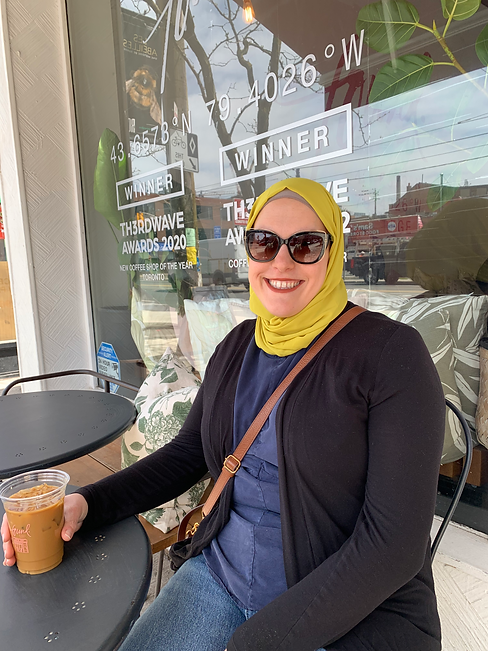
Delaney JoLynn Glass
Assistant Professor of Biocultural Medical Anthropology, University of Toronto St. George
I am a human biologist and anthropologist, and my overarching program of work aims to understand how early life adversities impact child, adolescent, and women’s health. I run the Biocultural Lab for the Study of Inequality and Social Stress (BLISS) at The University of Toronto Department of Anthropology. While I work with multiple methods ranging from the wet-lab to fieldwork, my program has three research streams 1) the relationship between social experience and stress, including potential for resiliency, on child and adolescent health; 2) impacts of conflict and war-related adversities on human growth, pubertal timing and reproductive aging in children and women; and 3) advancing social-ecological and biocultural models of adolescent and women’s health drawing from quantitative, biological, and qualitative evidence.
CURRENT RESEARCH AREAS
Psychosocial and energetic drivers of adolescent growth and development & women's reproductive and fertility trajectories
Much of my prior research has been focused on cultural and ecological contributions to the timing and pace of human growth, development, and puberty. This area of my research is concerned with the ways early life adversities (psychosocial, nutritional, energetic) shape puberty and adolescent development, especially in global contexts of forced displacement, migration, and social inequality. Current directions in this area are focused on maximizing longitudinal observational data from communities affected by war, conflict, and weather-disaster related events, data science techniques, and anthropological knowledge to understand drivers of puberty and women's reproductive lives from menarche through menopause.
Pictured on the right: Prof Glass in the Biodemography Laboratory at The University of Washington preparing the lab space for analysis of urinary cortisol and in her wet-lab at The University of Toronto.


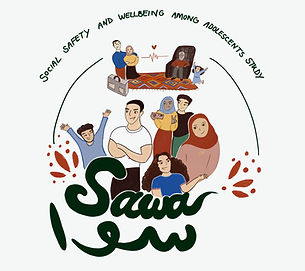
SAWA (سوا) : Social safety, Agency, and Well-being among Adolescents
An emerging area of my research group is considering how prosocial behavior and being safe/secure in social and familial relationships can foster empowerment and better health. SAWA is an Arabic word meaning "together" which broadly represents several related projects that think laterally about experiences of sociality, agency, and wellbeing among teenagers (and within families). I draw from Social Safety Theory (Slavich et. al. 2020, 2023), strengths-based approaches, and theories of biosocial embodiment to understand how social experience of adolescents potentially confers positive biological, developmental, neuroendocrine, and psychosocial outcomes.
My team is currently running a longitudinal fieldwork project on these topics among Arab adolescents ages 9-16 in Toronto, Canada that will eventually incorporate downstream biomarkers of cardiovascular health and stress in future waves of the study.
SAWA study logo designed and illustrated by: Layla Razek. Pictured on the right: Skyline of Amman, Jordan. Taken by Delaney from the neighborhood Jabal al-Weibdeh which is home to many youth and arts focused community spaces.


Remaking Adolescence Within Multigenerational Contexts
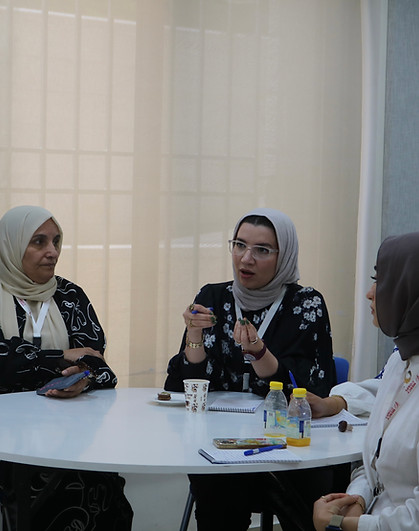
The main projects in this area include revisiting the very notion of adolescence and what it means across contexts (e.g., Jordan and Canada). Specifically, projects in this theme ask how ideas, expectations, and coming-of-age practices are dynamic and changing across generations but also influenced by local and global culture and ecology. While this work is largely aiming to be qualitative in nature, it forms necessary foundations for fundamental questions about mental health, parent offspring congruence and conflict, and adolescent well-being. Projects are in process in Jordan with a team of local collaborators and in a planning phase with collaborators in Morocco.
Weaving Meaning and The Threads of Causation in Qualitative and Quantitative Methods
As an anthropologist with a quantitative and qualitative background, I am very interested in causal reasoning, causal inference, as well as epistemological and analytical integration of mixed methods approaches. I view methods and statistical practices as ways of weaving together tapestries of meaning and I am intrigued by the different ways we can approach causality as such. I currently explore these issues through conceptual papers but also through collaborations on causal inference, concepts of ethnographic causality, and counterfactuals. I welcome collaborations and students interested in pragmatic integrations of methods and theories.


.jpg)
Funders, Partners, & Supporters in Research
My lab and research are housed within The Department of Anthropology at The University of Toronto. Additional funders, supporters and partners include:
The University of Toronto Connaught Secretariat
The Canadian Foundation for Innovation
The Ontario Research Fund
The Arab Community Centre of Toronto
Project SHAMS (Support and Health Advocacy in Middle Eastern Societies)
We Love Reading
Ruba Bilal, Founder of Silaa Network
Integrated International - Amman

Stay in touch!
Are you an interested student or collaborator**? Schedule an appointment with me.
**Individuals who are interested in biomarker/social neuroendocrinology research and community engaged biocultural research are encouraged to reach out in particular.
Please note for 2026-2027, I am not taking new independent study students (ANT497).
Department of Anthropology
University of Toronto, St. George